
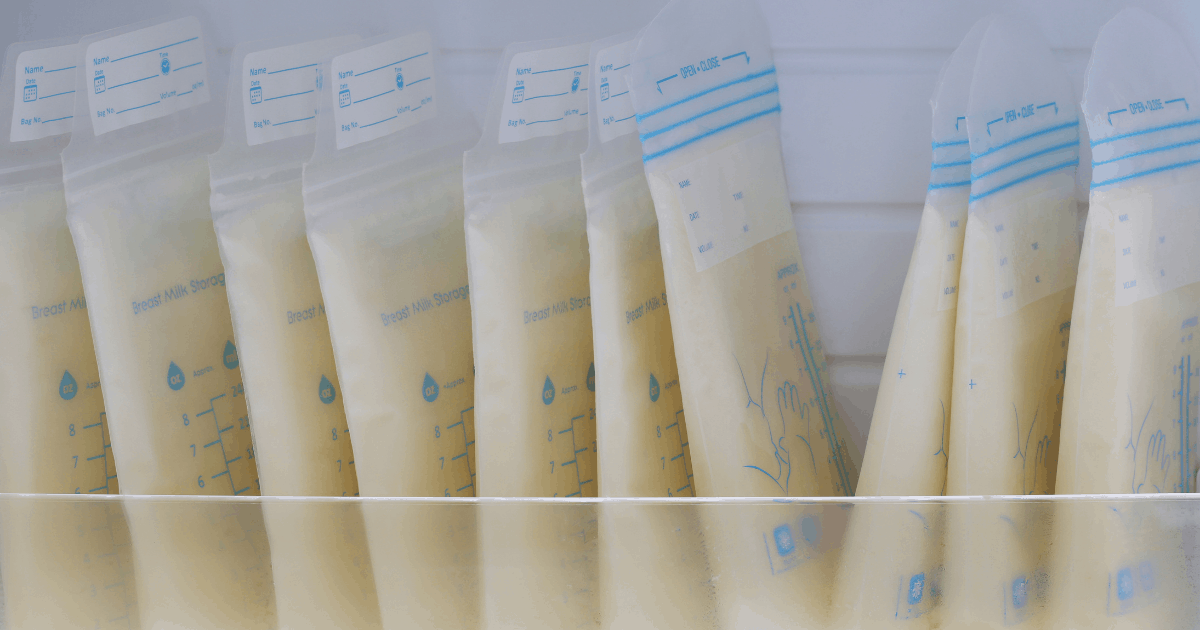
Breast Milk Storage Guidelines and Formula Storage Guidelines
Did you know the American Academy of Pediatrics recently updated its guidelines for storage of breast milk?
You can count on your team of postpartum doulas and lactation counselors here at Buddha Belly to always keep you up to date with the latest breast milk and formula storage guidelines.
We love that the guidance starts out like this. “Mothers should aim for cleanliness but realize milk is a biologic substance and full of probiotic and commensal bacteria. Hand washing, using clean or new containers, minimizing milk transfers (which waste fat and calories), and pumping directly into storage containers are recommended. Plastic or glass containers are fine, no evidence supports one over the other.”
If you’re pumping breast milk, you no doubt have Googled “breastmilk storage” at some point or another. You may have also found confusing, conflicting information that probably wasn’t based on evidence. We’ve compiled the latest, evidence-based practices for you below and keep this article updated.
For all handling of milk for babies and bottles or other feeding mechanisms, make sure you’re starting with clean hands and clean containers. Wash your hands for at least 20 seconds with warm soapy water. Here’s a complete step-by-step from the Centers for Disease Control and Prevention on how to clean, sanitize and store infant feeding items.
Breast Milk Storage
At Room Temperature: Breast milk is good at room temperature for up to 4 hours. If you haven’t used it yet, at this point you’ll want to either put it into the refrigerator or freezer. After feeding breast milk from a bottle, discard any remainder still in the bottle after 2 hours.
In the Refrigerator: Breast milk is good in the refrigerator for up to 4 days. If you haven’t used by this time, you’ll want to move it to the freezer for more long-term storage.
In the Freezer: Breast milk is good in the freezer for up to 12 months. The colder the freezer, the longer it will last. For instance, a chest freezer is likely to stay colder than a side-by-side freezer as part of your refrigerator unit. That’s because it’s usually opened less frequently.
Thawed/Previously Frozen Milk: Thawed milk is good for up to 2 hours at room temperature and up to 24 hours in the refrigerator. Do not refreeze previously frozen milk.
That’s it! Those are the complete breast milk storage guidelines recommended by the CDC and American Academy of Pediatrics (AAP.)
Breast Milk Handling
As we already mentioned, start with clean hands and parts (bottles, pumps, etc.). The AAP also recommends minimizing transfer between containers. This is due to the fact that the yummy and healthy fat in breastmilk tends to cling to container sides. We want to make sure your baby gets all of it!
Additionally, the AAP advises pooling milk expressed in a 24 hour period into one container. This ensures even distribution of nutrients between expressions.
Formula Milk Handling and Storage
Store formula in its original container until preparation. Start with clean hands and parts (bottles, etc.). Follow instructions on formula container for when to discard opened, unused contents and expiration.
At Room Temperature: Formula milk is good for up to 2 hours at room temperature. If you haven’t used it, you can move it to the refrigerator. After feeding formula milk from a bottle, discard any remainder within 1 hour from when feeding begins.
In the Refrigerator: Prepared formula (mixed according to the directions) can be stored in the refrigerator for 24 hours. Do not freeze prepared formula.
You can read more about safe formula preparation on our blog here.

Christie Rinder is the founder of Buddha Belly Doulas, Tampa Bay's original and largest doula agency. Supporting families since 2009, she's passionate about ensuring every family has the support they need during pregnancy, birth, and postpartum. She believes in helping women recognize their own inner wisdom, strength and power.
Having served as President of the Tampa Bay Birth Network for six years and 17 years serving families as a birth doula, she has a reputation for leadership, dedication and compassion. A childbirth educator, certified lactation counselor as well as a certified doula, she makes a point of ensuring mothers and their partners understand all their birthing options and what to expect on their journey. > learn more about Christie



Enjoy our popular guides to all things pregnancy, birth, postpartum and baby.

Tampa Pregnancy Guide
Your pregnancy journey is uniquely yours — and the right information makes all the difference. From first trimester essentials to...

Your Guide to Hiring a Doula
A doula can be a game-changer — but knowing where to start isn't always easy. This guide walks you through...

Labor & Birth Preparation Guide
Birth looks different for every family — and thoughtful preparation makes all the difference. Learn the basics of creating a...

Postpartum Recovery Guide
The weeks after birth are transformative — and often the least talked about. This Understand the physical and emotional sides...