
Your Complete Guide to Birth Planning
Buddha Belly Doulas | Tampa Bay's Award-Winning Doula Agency
There's a moment that happens for almost every expectant parent amidst painting the nursery and planning a baby shower when you realize: I should probably have a plan for the actual birth part.
You might find yourself wondering:
What if I want an epidural? What if I want to avoid an epidural? What if I'm planning a natural birth and then change my mind? What if I end up needing a cesarean? How can I trust my doctor to respect my birth plan?
Over the past decade+ of supporting Tampa families through births of every kind, we can confidently say that creating a birth plan isn't about controlling the outcome. It's about understanding your options, building the right team around you, and entering one of the most significant experiences of your life feeling informed and supported.
What Birth Planning Really Means
A birth plan, in the traditional sense, is a one or two page summary of your preferences that you bring to your birth setting and share with your care team. It should cover your pain relief preferences, who you want in the room, how you feel about interventions, and what you'd like to happen in the first moments after your baby arrives.
The process of creating your birth plan is full of learning and reflection, requiring preparation, education, and self-knowledge. We find a good birth plan will evolve over time.
A conversation you have with your partner at 11pm, talking through what you're hoping for and what you're afraid of might reveal a new priority for your plan.
Your plan will expand again when you attend a childbirth class and learn what you actually need to do when your water breaks, or you practice breathing through a contraction for the first time.
A prenatal meeting with your doula where you walk through your hospital's protocols will likely bring up key questions you want to ask your OB and a few more edits to your plan.
There is no right way to give birth. Whatever your birth experience may be, a home water birth, an epidural at 4 centimeters, a planned cesarean, an unplanned one, it is uniquely yours, and we believe in you. Your birth plan is there to help guide the way.
Why it's Important to Have a Birth Plan
Some people push back on birth plans, asking "Why bother, when birth is so unpredictable?" It's a fair question. We believe the process of creating a birth plan is always worth it, even when the outcome surprises you or is different than you had envisioned and hoped for.
When you've thought through your preferences in advance, and you've talked about them with your partner, your doula, and your care provider, you walk into labor with a stronger sense of who you are and what you want. Your clarity about what is important to you builds your confidence.
Your nurse at the hospital may be meeting you for the first time during active labor. Your birth plan is a quick, clear way to communicate your values, your priorities, and your personality.
Writing a birth plan before you've talked to your provider often reveals questions you didn't know you had. What are the routine protocols at your birth facility? When do they typically recommend certain interventions? What's the cesarean rate? These conversations are important to have 1-2 months before your due date.
The best birth plans we've seen aren't rigid checklists but rather expressions of values. When you write "I'd prefer to avoid continuous fetal monitoring if possible, but I understand there may be medical reasons to use it," you're sharing what's important to you.
Where are you planning to give birth?
One of the first and most consequential decisions you'll make is where you give birth; home, hospital, or birth center. Each birth location comes with its own culture, protocols, and options available to you. The right choice depends entirely on your health history, your risk factors, and what kind of experience you're hoping for.
Hospital birth is the most common choice in the United States, with the full spectrum of medical support, from epidurals and IV pain medications to surgical teams for cesarean births. If you have a high-risk pregnancy, a history of complications, or simply want the reassurance of a full medical team nearby, a hospital is likely your best option.
Hospitals vary widely in their approach to birth. Some have robust midwifery programs, labor tubs, and strong support for unmedicated births; while others are more intervention-oriented. It's worth touring your facility and asking specific questions about their protocols and statistics.
Birth center birth offers a middle path for low-risk pregnancies, a home-like setting with midwifery-led care. You'll have the freedom to move and labor in water. Transfer to a hospital is always possible if needed. Birth centers tend to attract families who want a more natural birth experience without the worries of being at home.
Home birth is a deeply personal choice for families who want to labor and deliver in their own space, attended by a licensed midwife and their chosen support team. For low-risk pregnancies with experienced providers, home birth is a safe and meaningful option. It also comes with unique planning considerations, from preparing your birth space to deciding who will care for pets and older children when labor begins.
Wherever you plan to give birth, be sure to tour the facility, ask about standard protocols, and understand what your options are within that setting. Our doulas are deeply familiar with Tampa Bay's birth landscape and can help you navigate these conversations.
Building Your Birth Team
The people around you who form your birth team, including who they are, what roles they play, how well they communicate with each other, will shape your experience in ways that are difficult to overstate.
Your medical provider, whether an OB, family physician, or midwife, is responsible for your clinical care. They monitor you and your baby, make medical recommendations, and manage complications if they arise. We encourage families to have a relationship of trust and open communication with your provider before labor begins.
A doula is your continuous, non-medical support person. She knows comfort techniques, knows how to help your partner support you, understands the landscape of birth and how to guide you through it.
As doulas we aren’t here to advocate for a particular type of birth, we're here to advocate for you, whatever your birth looks like. If you’re having a planned cesarean birth, she can be with you in pre-op, helping you stay calm. When permitted, she can even join you in the operating room. If your baby needs immediate medical attention and your partner goes with them, your doula stays with you so you’re never alone.
Your partner Labor can be long and unpredictable, and partners often feel helpless and uncertain about what to do to best support you. Your doula will be an expert at giving your partner concrete ways to help, providing reassurance, and stepping in when they need a break.
Other members of your birth team might include a birth photographer, a trusted family member or friend, or a sibling doula if older children will be present. Think carefully about who belongs in the room, and be honest with yourself about who might add stress rather than support.
And don't forget the logistics: who will watch your older children? Where will your dog go? These are important questions to answer well before your due date.
Labor Comfort and Coping Strategies
For many people, the biggest fear about labor isn't the unknown, it's the pain. There is no single right approach to coping with labor. What works beautifully for one person may not work for another. The goal is to have a full toolkit, and to have practiced breathing and relaxation techniques before you need them.
Water birth or laboring in water is one of the best ways we know to manage labor pain.
Movement and Position Changes
Movement is one of the most underestimated tools available to women in labor. For your baby to be born, she needs to descend and rotate through the birth canal, and your position directly influences how that progresses. Using gravity, staying mobile, and changing positions every 30 to 60 minutes can help bring baby down, ease discomfort, and help your body soften and open.
Positions to explore: standing, squatting, swaying, slow dancing with your partner, walking the halls, sitting on a birth ball, leaning over a bed or ball, resting on hands and knees, or even sitting on the toilet, which is remarkably effective. If you have an epidural and can't move freely, you can still shift positions in bed. Lying on your side with a peanut ball between your legs to keep your hips open is especially helpful, and switching sides every 30 to 60 minutes is recommended.
If your body feels pulled toward a particular position during labor, trust that impulse. Our bodies often intuitively know exactly what our baby needs.
Unmedicated Comfort Measures
For families planning an unmedicated birth, or who want to labor as long as possible before exploring medical pain relief, a combination of approaches tends to work best.
Slow, intentional breathing activates the parasympathetic nervous system and helps to anchor you during contractions.
Laboring in a tub or shower can provide significant relief. Many hospitals and all birth centers offer this option.
Particularly effective for back labor, a doula or partner can applies firm pressure to the lower back.
Creating a sensory environment that feels calm and personal using tools such aromatherapy and music can make a meaningful difference in how you experience labor.
One thing all of these approaches have in common: they require practice. As Americans, we aren't especially good at relaxing on demand, and labor, with all its intensity and uncertainty, is one of the most demanding moments imaginable. We encourage every family we work with to build a daily relaxation practice into the weeks before their due date. Fifteen to twenty minutes of guided meditation, a calming bath, a quiet walk at dusk, enjoying a cup of tea, a gentle yoga class; whatever you to practice being present and let go of what you can't control.
Medical Pain Relief Options
If you're interested in medical pain relief, it's important to understand your options before labor so you can make an informed choice.
Nitrous oxide (laughing gas) is self-administered through a mask and works by reducing pain perception rather than numbing you. It leaves your system within minutes, won't affect your baby, and won't interfere with breastfeeding. Many people find it takes the edge off without making them feel removed from the experience.
Narcotic medications such as morphine or stadol can reduce anxiety and take the edge off pain for a few hours. They do cross the placenta and may cause some drowsiness in your baby, so timing matters.
Epidural analgesia is the most commonly used form of pain relief in labor. It significantly reduces sensation in the lower half of your body, allows you to rest during a long labor, and keeps you alert if a cesarean becomes necessary. Possible side effects include slowed labor, blood pressure changes, and some potential effects on your baby's initial latch after birth. For many families, the ability to rest and stay emotionally present outweighs these considerations.
What to Include in Your Birth Preferences
When you sit down to write your birth preferences, think through each of the following phases of your experience.
Who do you want present? What do you want the lighting to be like? Do you want music? Do you prefer a quiet room? Do you want your doula to take photos? Consider what you'd like to eat and drink during labor, and check what your birth facility allows and provides.
How do you feel about various interventions and monitoring options such as an IV line? Continuous fetal monitoring versus intermittent? Feelings about Induction or natural induction alternatives?
What are your current intentions for pain relief? Under what circumstances would you consider other options? It helps to think about this in advance rather than making the decision in the middle of an intense contraction.
Do you want to push in an upright position if possible? Do you want to use a mirror? Do you want to reach down and feel your baby's head, or catch her yourself?
Do you want skin-to-skin contact immediately? Delayed cord clamping? Do you want to try breastfeeding in the first hour? Who do you want to announce the sex of the baby?
Even if you're not planning a cesarean, include a section for this possibility. Do you want a clear drape so you can see your baby born? Do you want your arms free? Do you want music in the operating room? Who stays with you if the baby needs immediate attention?
What are your wishes if your baby needs to go to the NICU? Think through who you want with the baby, and who stays with you.
Keep your birth preferences to one or two pages. Use simple, clear language. And share it in advance with your provider, your doula, and the hospital or birth center.
Planning for a Cesarean Birth
In our experience, a planned cesarean birth benefits the same thoughtful preparation as any other birth.
A surgical birth is nothing to feel ashamed of or apologize for. It takes extraordinary courage to lie on an operating table, fully awake, while a surgical team brings your baby into the world.
A cesarean birth plan might include your preferences for the operating room environment, music, lighting, who is present, whether you'd like a clear or lowered drape to see your baby born, skin-to-skin contact in the operating room if possible, delayed cord clamping, your partner's role, and how you'd like to be supported in recovery.
Your doula can be present in pre-op, with you in the operating room when permitted, and with you in recovery, especially if your partner has gone with the baby. In those early postpartum hours, a doula's presence can mean the difference between feeling alone and feeling supported. And because cesarean recovery is physically demanding (you've just had major abdominal surgery!), we strongly recommend having a postpartum doula available in those first days at home.
Emotional Preparation: The Part People Don't Talk About Enough
In our experience as doulas, emotional preparation matters as much, or maybe even more, than practical preparation.
Birth has a way of cracking you open in every way. The fear, the vulnerability, the sheer bigness of what is happening deserve to be acknowledged. Too often, the emphasis on positive thinking and empowered birth doesn't leave room for the very normal feelings of anxiety, uncertainty, and even grief that can show up.
Our founder Christie has given birth three times. The first was an emergency cesarean after discovering her baby was breech, a birth that was nothing like she had planned. That left her carrying grief and guilt she hadn't expected to feel. Her second pregnancy ended in loss at 17 weeks, and her third was a joyful home VBAC (vaginal birth after cesarean.) Through her own journey, and through the many births she has attended as a doula, she knows this without doubt: your birth will be uniquely yours.
If your birth doesn't go the way you planned, your feelings about that are valid. Grief about an unexpected outcome is real, even when you and your baby are healthy. Over time, many families find new perspective on their experience.
A message for partners: You are essential to this process of birth preparation If you feel uncertainty about how to help, talk about it. Show up to the prenatal visits. Attend the childbirth class. The more prepared and supported you feel, the better you'll be able to show up for the person you love.
Practical Birth Prep Checklist
At 32 to 36 weeks:
Write your birth preferences and share them with your provider and doula.
Confirm your birth team, including your doula, partner support plan, and backup for older children and pets.
Tour your birth facility if you haven't already.
Complete your childbirth education class.
Pack your hospital or birth center bag.
Install and have your car seat inspected.
In the final weeks:
Prepare and freeze easy meals for the postpartum period.
Set up your postpartum support, including who is coming to help, and for how long. The physical healing you will experience requires rest & time, including postpartum bleeding.
Consider booking a postpartum doula for overnight support in the first weeks.
Build a daily relaxation practice into your routine.
Logistics that often get overlooked:
Identify childcare for older children including a primary person and a backup.
Arrange pet care in advance, especially for dogs.
Know your route to your birth facility and have a backup.
If you're in hurricane season (June through November in Tampa Bay), know your contingency plan.
How We Support Your Birth Plan
Childbirth classes
Knowledge is one of the greatest gifts you can give yourself before labor, and a good quality birth prep class helps you feel informed and confident. Our Tampa childbirth classes cover the stages of labor, comfort techniques, birth interventions, cesarean birth, what to expect with a newborn and newborn care, and more.
Prenatal consultations
Before your due date, we meet with you and your partner in your home to talk through your birth preferences, review your birth facility's protocols, and make sure you feel prepared. This is one of our favorite visits.
Early labor
Your doula will be available for consults and guidance as you experience the early signs of labor approaching such as Braxton-Hicks Contractions, how to know when you have truly begun labor, and how to enjoy this stage of labor (Netflix and chill?!). Did you know sex can help move things along?!
Birth doula support
From the moment active labor begins, your doula is available to you. She will travel with you to your birth facility, and stay with you through the birth and the first hours afterward. She brings knowledge, calm, advocacy, and presence to your birth. Our doulas have driven through storms to be by a client's side, and we will do whatever it takes to be there for you.
Postpartum doula support
Our postpartum doulas make new parenthood feel manageable with overnight newborn care, daytime support, and breastfeeding guidance.
Frequently Asked Questions About Birth Planning
Do I need a doula if I'm having an epidural?
Absolutely. We help you know when it's time to say yes to an epidural, and provide emotional support, advocacy, and partner support.
Do I need a doula if I'm having a cesarean?
Yes, and this surprises many families. Doulas support cesarean births in pre-op, in the operating room when permitted, and in recovery. If your partner needs to go with the baby and you're still in the OR, your doula stays with you. You are never alone.
What if my birth plan goes out the window?
It might. Labor is unpredictable. But the process of preparing for birth and having a supportive team around you can change your experience of a birth that looks different than you ever could have imagined.
When should I hire a doula?
You should begin your doula search as early as possible, as doulas in Tampa Bay book up, especially during busy birth seasons. We recommend reaching out in the first or second trimester if you can. If you're further along, please do still reach out and we will do our best to find you a great match.
What should I do if I go into labor during a hurricane?
First, take a breath. Florida hospitals and birth teams are prepared for this. Contact your doula as soon as labor begins. Have your hospital bag packed early and know your route. We are committed to supporting families through storms, even meeting you where you are if you have been displaced.
When should I write my birth preferences?
We suggest creating a birth plan between 32 and 36 weeks, early enough to have meaningful conversations with your care provider, late enough that you know more about how your pregnancy is progressing.
You've Got This. And We've Got You.
Birth is one of the most profound things a human being can experience; powerful, humbling and unpredictable. It will ask more of you than you think you have, and you will find that you more inner strength than you could have imagined.
At Buddha Belly Doulas, we believe that the support you have during this time makes a real difference. Peace. Patience. Positivity. Strength. Wisdom. These are the qualities we bring to every family we serve. Whatever your birth looks like, we are honored to be part of it.
Ready to start the conversation? Book a free discovery call with Buddha Belly Doulas today.
Buddha Belly Doulas is Tampa Bay's award-winning doula agency, named Best Doula by Best of the Bay 2025. We support all families, without regard to sexual orientation, gender identity, race, gender, disability, religion, national origin, or family structure.
RESOURCES
HOSPITALS
Morton Plant Hospital(opens in new tab)
Mease Countryside Hospital(opens in new tab)
Bayfront Baby Place(opens in new tab)
St. Petersburg General(opens in new tab)
Medical Center of Trinity(opens in new tab)
Tampa General Hospital(opens in new tab)
St. Joseph's Women's Hospital(opens in new tab)
St. Joseph's Hospital-South(opens in new tab)
St. Joseph's Hospital-North(opens in new tab)
AdventHealth Tampa(opens in new tab)
AdventHealth Wesley Chapel (opens in new tab)
MICROBIOME
PHOTOGRAPHY
Renee Nicole Photography(opens in new tab)
Melanie Amparo Photography(opens in new tab)
Brittany Elise Photography(opens in new tab)
CHILDBIRTH
The Tampa Bay Birth Network(opens in new tab)
The Bradley Method of Husband Coached Childbirth(opens in new tab)
Lamaze(opens in new tab)
HypnoBirthing International(opens in new tab)
HypnoBabies, Childbirth Hypnosis(opens in new tab)
Plus Size Birth(opens in new tab)
WATERBIRTH
Waterbirth International(opens in new tab)
Evidence on the Safety of Water Birth(opens in new tab)
On the Buddha Belly Doulas blog:

From Baby Showers to Support Parties: A Better Way to Celebrate Parenthood
There was a time when “baby shower” meant pastel cakes, a diaper tower, and a room full of loved ones oohing and aahing over tiny onesies and swaddle blankets. I…

Which Tampa Bay Hospitals Permit Doulas? (updated January 2022)
As we know, COVID is currently surging throughout the greater Tampa Bay area. As such, visitor policies at local hospitals are frequently changing. So, which local hospitals are permitting doulas…

Tampa Bay Hospital VBAC Rates 2019
Planning to have a VBAC? (VBAC = vaginal birth after cesarean.) Do you know the VBAC rate for your hospital? I know we say this a lot, but it bears…

Tampa Bay Hospital C-Section Rates 2019
Do you know the c-section rate for your hospital? Without a doubt, your hospital of choice has a huge impact on the outcome of your birth experience. There are numerous…

The Birth Center of St. Pete
Last week I visited with the midwives at The Birth Center of St. Pete, a great birth location option for families who are interested in having a low-intervention, unmedicated labor…
Giving Birth at AdventHealth Tampa
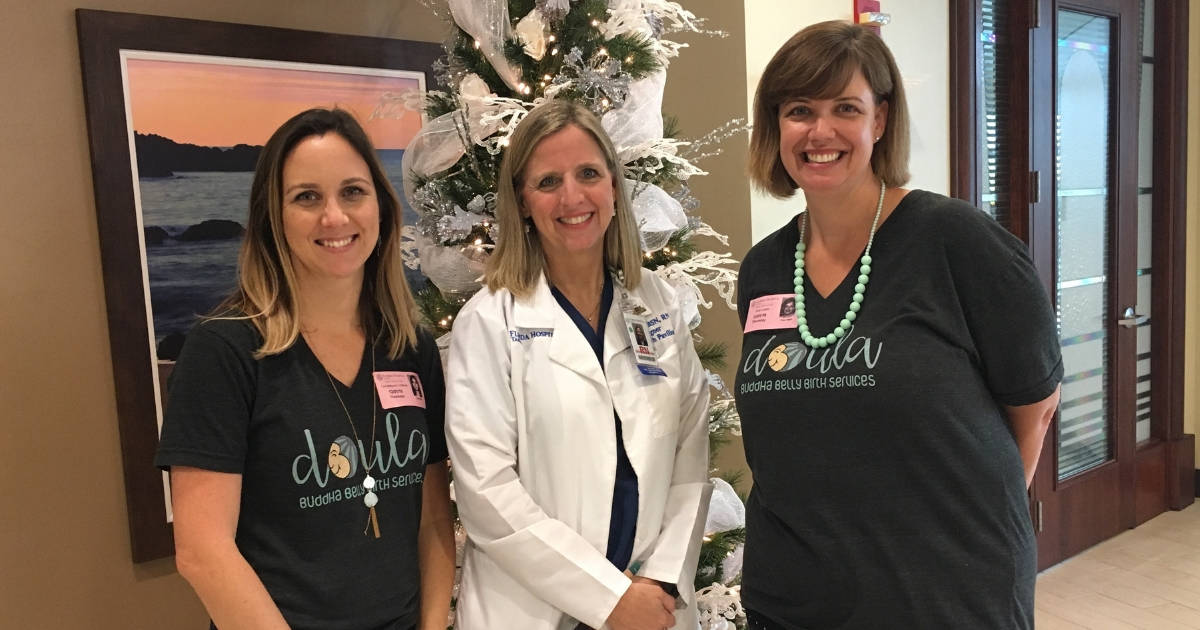
What is it like to give birth at AdventHealth Tampa? We recently toured and met with Birth Designer, Emily Sullivan, RN, BSN. Here are some of the things we learned…

Giving Birth at Clearwater’s Morton Plant Hospital
Tampa Bay is fortunate to have many different excellent birth options, including Morton Plant hospital in downtown Clearwater. Today we had a private tour and are pleased to share what we…

16 Reasons We Recommend Tampa General Hospital for Childbirth {updated May 2021}
We have had great experiences with the medical professionals of Tampa General Hospital. We’ve been toured through the entire labor and delivery ward and NICU. We’ve been invited numerous times…