
Newborn Care: Why Delay Clamping Baby’s Umbilical Cord?
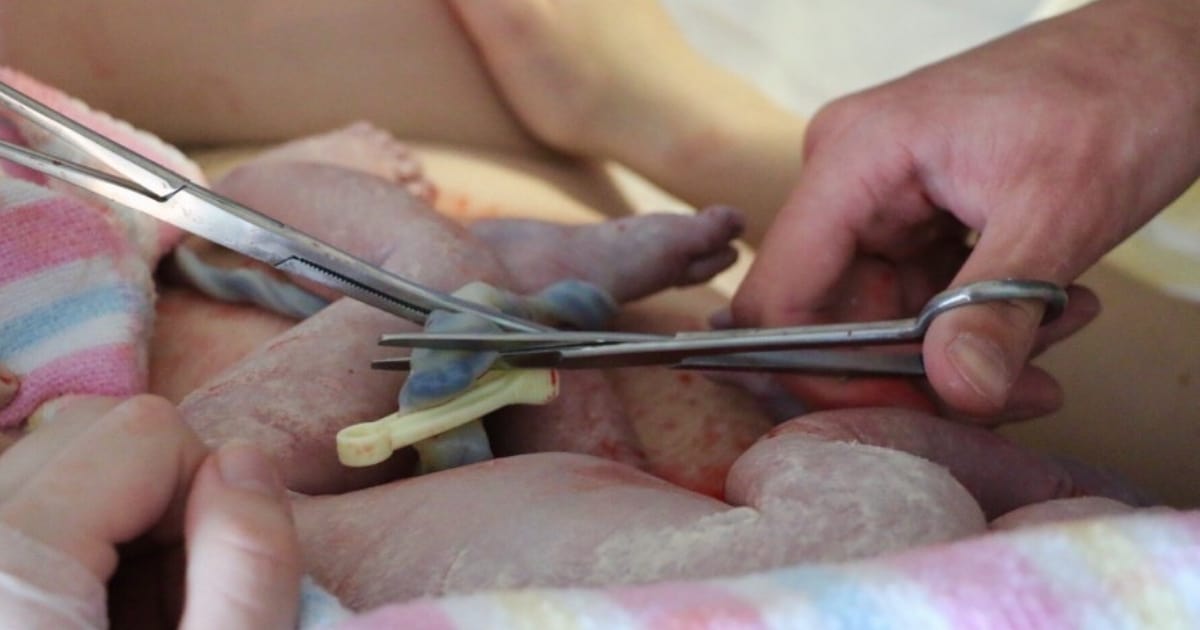
Once your baby is born, at some point, his/her umbilical cord must be clamped and then separated from the placenta. Many families are now considering delaying when this clamping happens because of the benefits offered to the newborn.
Approximately one-third of a baby’s total blood volume is in the placenta and/or umbilical cord at birth.
Immediately clamping the cord means lower iron and stem cell levels in baby, too. Babies whose cords are left intact for two to three minutes also appear to have better cardiopulmonary functioning.
“Delayed cord clamping promotes a healthy neonatal cardiopulmonary transition, prevents iron deficiency at a critical time in brain development, provides the newborn with a rich supply of stem cells, and helps sick neonates achieve better outcomes—all with little apparent risk to mother or baby. The evidence of benefit from DCC is so compelling that the burden of proof must now lie with those who wish to continue the practice of immediate clamping, rather than with those who prefer—as nature intended—to wait.” Mark Sloan, M.D.
Preterm Babies
It appears that preemies stand to benefit the most from delayed clamping, showing positive signs like improved blood pressure, the need for fewer medicines, transfusions and other severe medical issues.
Long-term Benefits
There is also new evidence that babies whose cord clamping was delayed experience a “small boost in neurodevelopment” in the form of modestly higher scores in social and fine motor skills.
Why not wait?
Until recently, many care providers believed delay increased the chance of the mother hemorrhaging, jaundice, risk of transmission in HIV+ mothers, back-flow bleeding or takes longer, but research does not support these positions.
How long is optimal?
The World Health Organization (WHO) recommends “late” cord clamping – a delay of one to three minutes or until the cord has ceased pulsating- for all births, unless the baby needs resuscitation. This recommendation applies to babies born both vaginally and via cesarean.
Can skin-to-skin still be performed before the cord is cut?
Yes! Unless your baby has an unusually short cord, she can be laid on your bare chest immediately after birth, while the cord is still attached.
Is “milking” the same as delayed cord clamping?
No, and more research is needed to see if this practice offers any benefits or risks.
Talk to your care provider ahead of time to discuss your preferences and their routine procedures and be sure to include your wishes in your birth plan.

Christie Rinder is the founder of Buddha Belly Doulas, Tampa Bay's original and largest doula agency. Supporting families since 2009, she's passionate about ensuring every family has the support they need during pregnancy, birth, and postpartum. She believes in helping women recognize their own inner wisdom, strength and power.
Having served as President of the Tampa Bay Birth Network for six years and 17 years serving families as a birth doula, she has a reputation for leadership, dedication and compassion. A childbirth educator, certified lactation counselor as well as a certified doula, she makes a point of ensuring mothers and their partners understand all their birthing options and what to expect on their journey. > learn more about Christie




Enjoy our popular guides to all things pregnancy, birth, postpartum and baby.

Tampa Pregnancy Guide
Your pregnancy journey is uniquely yours — and the right information makes all the difference. From first trimester essentials to...

Your Guide to Hiring a Doula
A doula can be a game-changer — but knowing where to start isn't always easy. This guide walks you through...

Labor & Birth Preparation Guide
Birth looks different for every family — and thoughtful preparation makes all the difference. Learn the basics of creating a...

Postpartum Recovery Guide
The weeks after birth are transformative — and often the least talked about. This Understand the physical and emotional sides...