
What Does A Contraction Feel Like? (updated 2022)
What does a contraction feel like?
Will it hurt?
You’re not the first one to ask these question. Every first time mom asks and many repeat mothers do, too! It’s very hard to imagine ahead of time what the physical sensation of a contraction feels like. Likewise, it is hard to remember what a contraction feels like. It’s hard to describe what a contraction feels like. The truth is that they feel a bit differently for everyone.
Here’s how others have described a contraction:
-
A very intense menstrual cramp
-
Your abdomen may become very hard and tight, and this tightness is accompanied with increasing pain and intense pressure. (Remember, your uterus is a muscle, which restricts and contracts to open your cervix and move baby down.)
- Sitting becomes very uncomfortable and the sensation would come and go like waves of the ocean growing in intensity and duration
-
Deep belly gas that isn’t relieved after a trip to the bathroom
- Kind of like the feeling of a charlie horse type of muscle spasm that subsides and then returns.
Where will I feel the contraction?
-
Usually, the contraction will be felt in your abdomen. Some women can feel the contraction start at the top of their uterus or lower back and radiate downwards towards the abdomen. Other women just feel the pain, and that’s ok. Some women don’t feel much pain at all, and that’s ok, too.
-
Sometimes, the pain circles from your abdomen around your hips to your back. This is often an indicator that the baby is traveling downwards facing your belly. The easiest way for baby to be born is facing your back – this makes it easier to pass under your pelvic bone. Don’t worry, though, lots of babies enter the world “sunny side up.”
-
Sometimes, the pain travels from your abdomen down into your thighs as baby travels down.
How do contractions flow?
Something you should keep in mind is that contractions start and then stop. It is not a continuous pain. In early labor contractions are usually about 10-15+ minutes apart. That means you will get a 10-15 minute break before the next contraction starts. As labor progresses they becoming closer together and the break in between gets smaller. This can happen over a course of many hours or days or it can happen quickly. Typically it takes many hours for labor to ramp up and become more intense. Finally, towards the end of your labor, the contractions will be anywhere from 2-5 minutes apart.
My own laboring has felt pretty consistent from one baby to the next.
My first daughter came face up and with her hand next to her face. Labor was two days long, stopped and started and I felt a lot of intense pain in my back. (The shower helped a lot!)
With my second daughter, I felt the contractions only in my abdomen and, while they were painful, were actually really manageable with a deep breathing ritual I developed spontaneously.
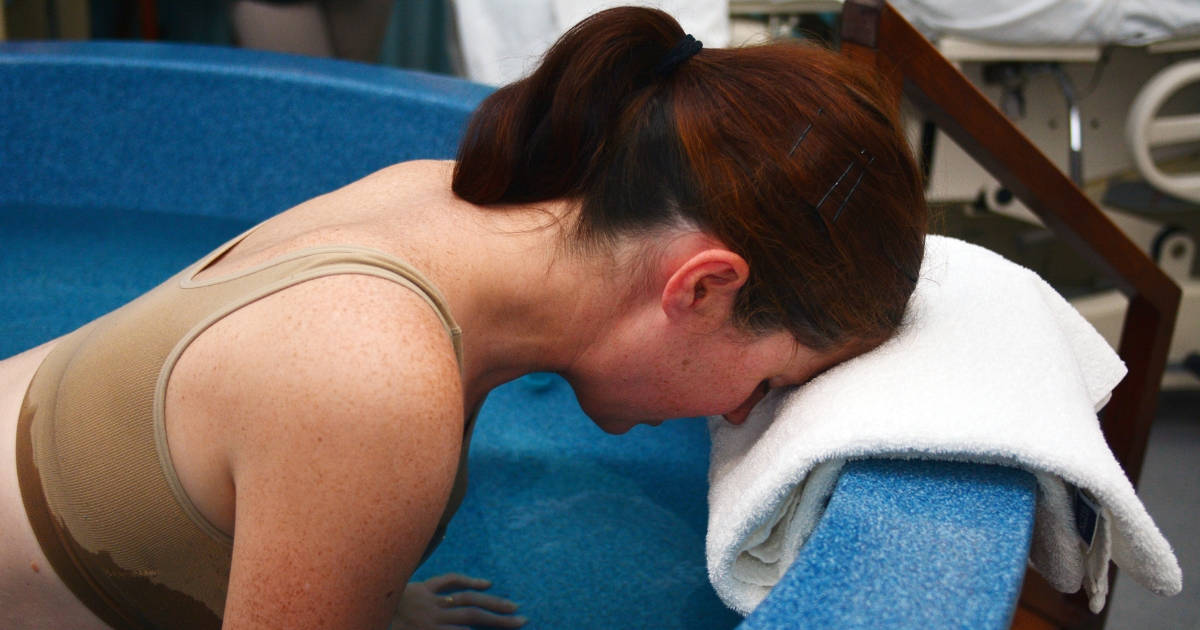
With my third daughter, I felt the contractions around my hips and back – and panicked a bit, remembering my first labor. I quickly got into the birth pool and eased most of my back pain, thank goodness!
Pain management options
Contractions can be painful, but there are many options for managing pain including medicated and unmedicated options. Your birth doula is also a wealth of knowledge to help you as you figure out what will be the best strategy for you. Birth doulas have specialized training in labor comfort techniques and can also talk you through all of the medical pain relief options as well.
Also, check out: Braxton Hicks Contractions: The Prequel to Labor.

Christie Rinder is the founder of Buddha Belly Doulas, Tampa Bay's original and largest doula agency. Supporting families since 2009, she's passionate about ensuring every family has the support they need during pregnancy, birth, and postpartum. She believes in helping women recognize their own inner wisdom, strength and power.
Having served as President of the Tampa Bay Birth Network for six years and 17 years serving families as a birth doula, she has a reputation for leadership, dedication and compassion. A childbirth educator, certified lactation counselor as well as a certified doula, she makes a point of ensuring mothers and their partners understand all their birthing options and what to expect on their journey. > learn more about Christie




Enjoy our popular guides to all things pregnancy, birth, postpartum and baby.

Tampa Pregnancy Guide
Your pregnancy journey is uniquely yours — and the right information makes all the difference. From first trimester essentials to...

Your Guide to Hiring a Doula
A doula can be a game-changer — but knowing where to start isn't always easy. This guide walks you through...

Labor & Birth Preparation Guide
Birth looks different for every family — and thoughtful preparation makes all the difference. Learn the basics of creating a...

Postpartum Recovery Guide
The weeks after birth are transformative — and often the least talked about. This Understand the physical and emotional sides...