
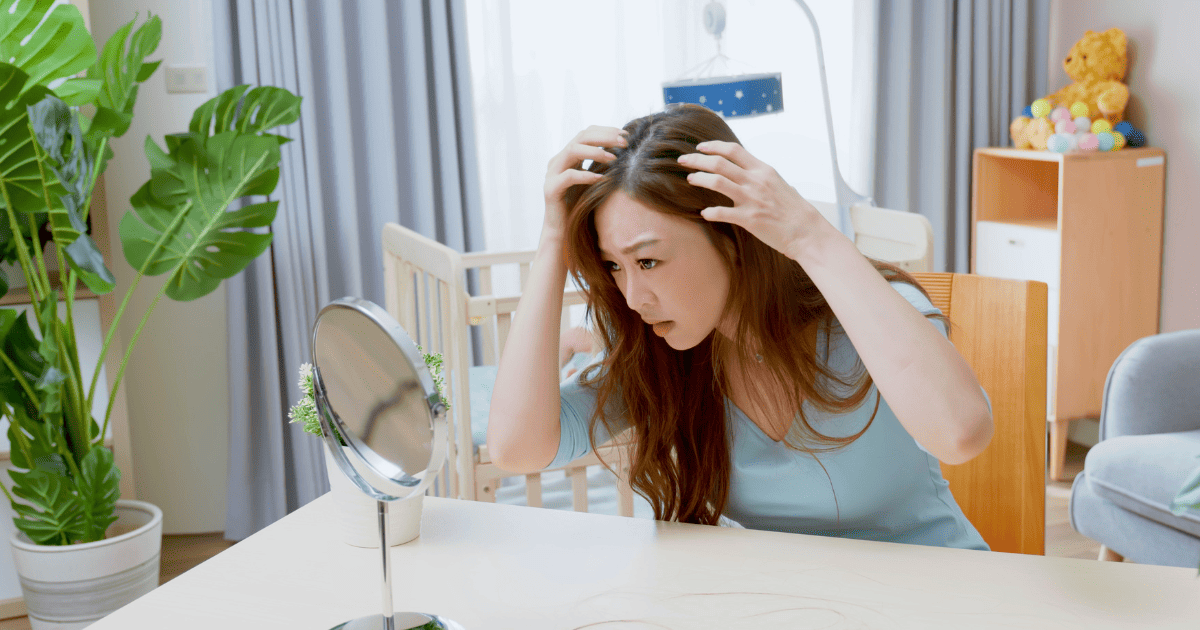
Postpartum Hair Loss: Beyond the Baby Glow
During each of my pregnancies my hair was so shiny, long and healthy I felt like I was living in a Pantene commercial every day. Fast forward a few months with a newborn in my arms, and those commercials had officially been axed.
Along with the joys of welcoming your new baby come a host of physical changes. Postpartum hair loss is one thing many new mothers encounter. It can be a distressing experience, but understanding more about this and how to manage it can help you navigate this transitional phase with confidence and grace.
When does postpartum hair loss start?
For most women, it kicks in around three to four months postpartum, though the timing can vary. This delay is due to hormonal changes during pregnancy, which can prolong your hair’s growth phase.
Why does postpartum hair loss happen?
Your hair goes through four main phases: the growth phase, the transition phase, the resting phase, and the shedding phase. Different hair follicles are at different stages of the growth cycle at any given time. After the shedding phase, the cycle repeats itself, and new hair begins to grow from the follicle, initiating another growth phase.
During pregnancy, high levels of estrogen prolong the growth phase of hair, resulting in thicker, fuller locks. However, after childbirth, when hormone levels normalize there is a sudden drop in estrogen. This abrupt hormonal shift triggers hair follicles to enter the resting phase and shedding phase simultaneously, leading to noticeable hair loss or hair thinning.
How long will it last?
The duration of postpartum hair loss varies. Typically, the shedding peaks around 3 – 4 months postpartum, and the hair loss subsides within 6 – 12 months after childbirth. Hair growth resumes as the hormone levels stabilize and the hair returns to its normal growth cycle. However, in some cases, it may take up to a year or longer for hair to regain its pre-pregnancy density.
How to cope with postpartum hair loss:
While postpartum hair loss cannot be entirely prevented, several strategies can help manage and minimize its impact:
Embrace a Good Haircut:
Talk to your hair stylist who can recommend a flattering haircut that adds volume and reduces the appearance of thinning hair. Layers, shorter styles, and textured cuts can create the illusion of fuller locks.
Try Different Hairstyles:
Experiment with different styles, such as updos, braids, or loose waves, that add volume and conceal thinning areas. Use scrunchies or barrettes to put hair up instead of elastic bands. Avoid hairstyles that pull your hair tightly, as they can cause additional stress on fragile strands.
Gentle Hair Care:
Treat your hair with extra care during this phase. Use a wide-toothed comb or a brush with soft bristles to avoid unnecessary breakage. Minimize heat styling and harsh chemical treatments that can further weaken your hair.
Nourish Your Hair from Within:
Consume a balanced diet rich in vitamins, minerals, and proteins to support healthy hair growth. Foods like eggs, salmon, leafy greens, nuts, and seeds provide essential nutrients for strong, resilient hair.
Consider Supplements:
Talk to your care provider about supplements like biotin, vitamin D, and iron, which are known to promote healthy hair growth. Remember to consult a professional before adding any supplements to your routine. You can also continue to take your prenatal vitamins.
Be Patient and Seek Support:
Remember that postpartum hair loss is a temporary phase. Focus on self-care and seek support from loved ones, your postpartum doula or join support groups where others share their experiences. Discussing your concerns can help alleviate anxiety and normalize the situation.
Postpartum hair loss is a common occurrence experienced by many women. Understanding that it is temporary can help you manage the emotional impact. By maintaining a healthy hair care routine and nourishing your body, you can minimize its effects. This too shall pass and you will be back to loving your gorgeous mane once again!

Christie Rinder is the founder of Buddha Belly Doulas, Tampa Bay's original and largest doula agency. Supporting families since 2009, she's passionate about ensuring every family has the support they need during pregnancy, birth, and postpartum. She believes in helping women recognize their own inner wisdom, strength and power.
Having served as President of the Tampa Bay Birth Network for six years and 17 years serving families as a birth doula, she has a reputation for leadership, dedication and compassion. A childbirth educator, certified lactation counselor as well as a certified doula, she makes a point of ensuring mothers and their partners understand all their birthing options and what to expect on their journey. > learn more about Christie


Enjoy our popular guides to all things pregnancy, birth, postpartum and baby.

Tampa Pregnancy Guide
Your pregnancy journey is uniquely yours — and the right information makes all the difference. From first trimester essentials to...
Your Guide to Hiring a Doula
A doula can be a game-changer — but knowing where to start isn't always easy. This guide walks you through...
Labor & Birth Preparation Guide
Birth looks different for every family — and thoughtful preparation makes all the difference. Learn the basics of creating a...

Postpartum Recovery Guide
The weeks after birth are transformative — and often the least talked about. This Understand the physical and emotional sides...